
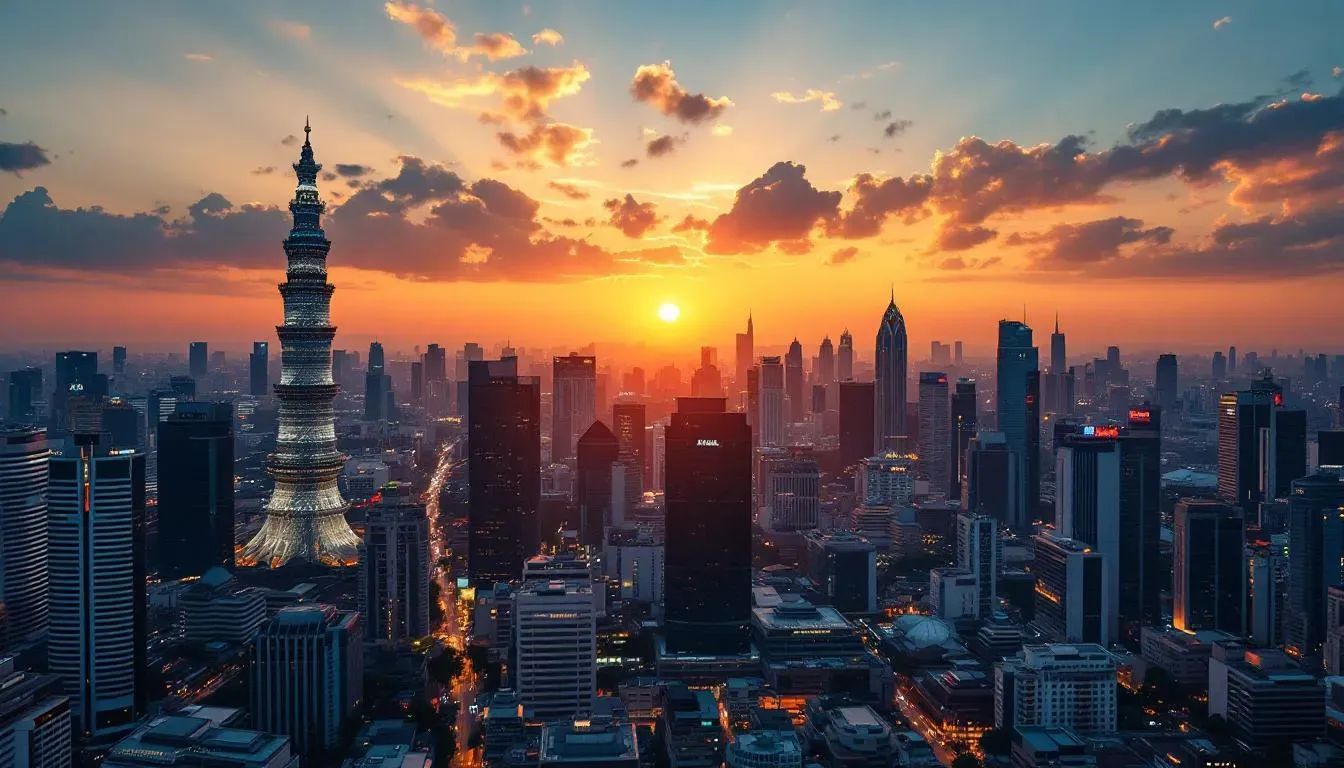
Filming in Jakarta: Permits, Locations & Production Logistics
From Jakarta Film Commission permits and RT/RW village clearances to Kota Tua heritage facades and Senayan glass towers — everything international productions need to plan a shoot in Jakarta
Filming in Jakarta — syuting di jakarta — is one of Southeast Asia's most rewarding and most layered production operations. Indonesia's capital pairs a deep, English-capable crew base and base costs well below regional rivals with a permit system that touches each level of authority: Jakarta Film Commission at the city, the national police (Polri), the Polda Metro Jaya regional command, BKSDA for covered forest and park areas, and — uniquely in Jakarta — the RT (Rukun Tetangga) and RW (Rukun Warga) neighborhood heads who govern access to most residential streets. Producers come for the visual range: the Dutch colonial facades of Kota Tua, the dense Chinese-Indonesian textures of Glodok, the modern glass-and-steel skyline of the Senayan and Sudirman business districts, the kampung backstreets that defined The Raid, and the fast access to Bali for second units. This guide walks through what global teams actually need to know to plan a production in Jakarta: where to file permits. This neighborhoods deliver which looks, when to shoot around monsoon season, how to plan around the city's traffic, and how lead times shape your schedule. We work the Jakarta film offices, neighborhood authorities, and crew rosters each week, so the focus here is operational, not editorial. Use it as a hub — each section links out to deeper guides for the area you need to plan around.
As Fixers in Indonesia, we bring local expertise to international productions filming in Indonesia. Our team's deep knowledge of local regulations, crew networks, and production infrastructure ensures your project runs smoothly from pre-production through delivery.
ACT 01
Why Jakarta for Production
Visual Range, Crew Depth, and the Gateway to Indonesia
Jakarta is the operational center of Indonesian audiovisual production. The reasons global teams keep choosing it for film in Jakarta go well beyond convenience — it is the only city in the country that combines a tier-one crew base, the national permit authorities, and the airport hub that gets second units to Bali, Yogyakarta, or Komodo inside a single shoot day.
- Indonesia produces 200+ feature films a year, with the majority crewed and funded out of Jakarta
- Bekraf (Badan Ekonomi Kreatif) and the Jakarta Film Commission sit within a single travel day across the city
- Crew rosters cover Bahasa Indonesia, English, and increasingly Mandarin, Japanese, and Korean
- Colonial Kota Tua, Glodok Chinatown, Senayan towers, and kampung backstreets all sit inside one shooting week
Industry Depth and the Jakarta Production Ecosystem
Jakarta film production runs on a layered ecosystem that has matured fast over the past decade. Bekraf — the national creative economy agency — sets policy and incentive structure. The Jakarta Film Commission, operating under the DKI Jakarta provincial government, handles location liaison and city-level permit planning. Major TV networks (RCTI, SCTV, Trans TV, Kompas TV) and global streamers (Netflix, Disney+, Amazon Prime, Viu) all keep Jakarta-based commissioning teams or local content partners. That density means gear rental houses, post-prod facilities, customs brokers for ATA Carnet imports, and legal counsel for global shoots all sit within the same corridor between Sudirman, Kuningan, and Kemang. For inbound shoots, this translates to fewer hand-offs and shorter pre-production cycles than in cities where the production stack is split across many regions.
Studio and Stage Infrastructure
Jakarta does not yet match Bangkok or Kuala Lumpur on large-format soundstage capacity. Producers should plan around this from day one. Major scripted projects needing 1,000 m²+ stages, water tanks, or virtual production volumes often combine Jakarta location work with stage days in Bali or Bangkok, or build short-term stages in industrial spaces in Cikarang, Tangerang, or Bekasi. That said, several mid-size studios serve commercials, music videos, and broadcast production — including facilities in Kuningan, Mampang, and the wider South Jakarta corridor — and our team often sources warehouse builds with full power, parking, and HVAC for shoots that need controlled interior space without the hour-plus drive to the industrial belt. Gear rental from Arri Rental Indonesia, Plus Eight Equipment, and other Jakarta-based houses covers Alexa, RED, Sony Venice, and the standard global lighting packages.
Crew, Talent, and Language Coverage
Jakarta crews are deep in each department. Cinematographers, gaffers, key grips, sound mixers, art directors, costume designers, hair and makeup, VFX supervisors, and stunt coordinators are all ready, with day rates that stay competitive against regional peers. English fluency is standard at HOD level — many senior crew trained on global co-productions or studied abroad — and Jakarta is the easiest Indonesian city to source bilingual second units for shoots running in Mandarin, Japanese, or Korean. Talent agencies cluster in South Jakarta around Kemang, Cilandak, and SCBD, and casting directors here often handle global SAG and Equity-style negotiations for streaming features and global commercials. Stunt teams trained on The Raid franchise stay a regular Jakarta export for action work across Asia.
Signature Visual Looks
The visual reasons producers come to Jakarta are well set up. Kota Tua delivers the only true Dutch colonial square in Southeast Asia at production scale. Glodok's narrow lanes give a dense Chinese-Indonesian texture that no other regional city can match. The Senayan and Sudirman business districts deliver glass-tower modern worthy of any global financial-thriller backdrop. The kampung neighborhoods of West and North Jakarta — the textures that defined The Raid — stay easy to reach with the right RT/RW relationships. And Bali sits two hours away by air for tropical second-unit work, with Eat Pray Love and Ticket to Paradise both anchoring the global recognition of the Bali register. Each of these is briefed in detail below, with guidance on how shoot in Jakarta workflows actually clear them.
ACT 02
Filming Permits in Jakarta
Jakarta Film Commission, Police, RT/RW, and BKSDA
Jakarta filming permits operate at many levels and are unusually relationship-driven. This section gives you the operational summary — for the full step-by-step on records, fees, and edge cases, see our deep-dive guide.
- Jakarta Film Commission (DKI Jakarta) is the primary city-level coordinator for public-domain filming
- Polda Metro Jaya (regional police) handles traffic stops, road closures, and security perimeters
- RT/RW (neighborhood and village heads) clearance is required for residential street and kampung shoots
- BKSDA governs filming in covered forests, mangroves, and conservation areas around Greater Jakarta
- Heritage sites — Kota Tua museums, Istiqlal Mosque, Monas — are ruled by their own administrations
Jakarta Film Commission and Bekraf
The Jakarta Film Commission, operating under the DKI Jakarta provincial government, is the primary entry point for city-level filming planning. They review shoot synopses, neighborhood impact, gear lists, and the production's local representative before issuing the city filming letter (Surat Izin Pengambilan Gambar). Bekraf — the national creative economy agency — handles the foreign film crew permit framework that global shoots need before they can legally work on Indonesian soil. This includes KITAS work permits for non-Indonesian HODs and the foreign filming permit issued in planning with the Ministry of Tourism and Creative Economy. Standard street shoots with a small footprint mostly clear in three to five weeks. Larger setups — full lighting packages, power packs, picture cars, base camp — extend the lead time to six to eight weeks because they trigger police and neighborhood-level planning.
Police, Polda Metro Jaya, and Traffic Coordination
Anything that affects road traffic, needs a security perimeter, or involves stunts, weapons, pyrotechnics, drones, or large crowd scenes routes through Polda Metro Jaya, the regional police command for Greater Jakarta. Lane closures along Sudirman, Thamrin, or Gatot Subroto are in tech possible but need the longest lead times in the city — eight to twelve weeks is realistic, and several axes are simply not closable during peak commute or during major political events at the central government complex. Police planning is a paid service line and almost always needs an on-set police presence (mostly two to six officers based on shoot scale). Drone operations also need a permit from the Indonesian Ministry of Transportation (Kemenhub) and may need NOTAM planning for flights above 150 metres or near off-limits airspace around Halim and Soekarno-Hatta.
RT/RW Neighborhood Clearance
This is the layer that most surprises global shoots. Almost each residential street, kampung lane, and traditional market in Jakarta is ruled at the neighborhood level by a RT (Rukun Tetangga) head and a RW (Rukun Warga) head who sit above several RTs. No city-level permit overrides their consent. For shoots in residential areas — and most Jakarta location work touches one — your fixer must visit the RT and RW offices in person, present the production, negotiate any neighborhood goodwill payments (mostly modest and well-defined when handled correctly), and secure written consent before the city permit will be honored on the day. Lead time for RT/RW clearance is one to three weeks once the city forms is in motion. Skipping this step is the most common reason global shoots get shut down on day one in Jakarta.
BKSDA, Heritage Sites, and Specialist Authorities
Filming in covered forests, mangrove conservation areas, national parks, or any site ruled under the Indonesian conservation framework needs a permit from BKSDA (Balai Konservasi Sumber Daya Alam), the national conservation authority. This applies to mangrove areas around Muara Angke and Pulau Seribu (the Thousand Islands off Jakarta's coast), as well as any second-unit work in Indonesian national parks. Heritage sites — the Kota Tua museums, Istiqlal Mosque, the National Monument (Monas), the Presidential Palace perimeter — are ruled by each body's own filming office. Lead times here run six to twelve weeks, location fees differ widely, and approvals are conditional on shot lists, gear lists, and at times script review. For a complete walkthrough of permit types, fees, records, and rejection-recovery tactics, see our Jakarta permit deep-dive at /blog/filming-permit-city-guide/.
ACT 03
Locations in Jakarta
The Visual Categories That Bring Producers to the City
Jakarta's strength as a location city is the sheer range of distinct visual registers within a single metropolitan area. The types below cover most of what global shoots request — for the operational scout files (best times of day, light, foot traffic, permit difficulty), see our Jakarta location scouting guide.
- Kota Tua — Dutch colonial square, Cafe Batavia, Fatahillah, museum facades
- Glodok — Jakarta Chinatown, narrow lanes, traditional shophouses, temple interiors
- Senayan and Sudirman — glass towers, SCBD plaza, financial district modern
- Kampung neighborhoods — North and West Jakarta, the texture from The Raid
- Menteng — colonial-era residential, Diponegoro and Imam Bonjol streets
- Pasar Baru and traditional markets — vendor stalls, working textures
- Ancol and the North Jakarta coastline — port, fishing villages, Sunda Kelapa harbor
- Industrial belt — Cikarang, Tangerang, Bekasi warehouses for stage builds and night-exterior work
Kota Tua, Glodok, and the Heritage Districts
Kota Tua — Old Town Jakarta — is the single most-requested location in the city. Fatahillah Square, the surrounding museum facades (Jakarta History Museum, Wayang Museum, Fine Arts Museum), Cafe Batavia, and the Dutch-era street grid deliver a visual register that exists nowhere else in Southeast Asia at production scale. Permits here route through both the Jakarta Film Commission and the person museum administrations, with lead times of four to eight weeks for clean access. Glodok. Jakarta's historic Chinatown — sits a short drive away and gives narrow lanes, traditional Chinese shophouses, the Petak Sembilan market, and Vihara Dharma Bhakti temple interiors. Glodok shoots are RT/RW-intensive because the neighborhood is densely residential. Early-morning windows (5–8 AM) mostly beat the foot traffic.
Senayan, Sudirman, and the Modern Skyline
For the modern register, the Sudirman–Thamrin axis is Jakarta's financial spine, with the SCBD (Sudirman Central Business District) plaza, the Pacific Place towers, the Indonesia Stock Exchange complex, and the Wisma 46 skyline serving as Jakarta's go-to glass-and-steel backdrops. Senayan adds the GBK sports complex, the Plaza Senayan and Senayan City retail districts, and high-rise hotel interiors that work for finance, tech, and modern thriller registers. Permit complexity here is moderate at the building-management level but escalates fast for any street-level work because Sudirman and Thamrin carry the city's heaviest weekday traffic. Weekend shoots (above all Sunday morning during Car Free Day, when the axis closes to cars) are the operational answer for street-level coverage.
Kampung Neighborhoods and the Action Register
The kampung neighborhoods of North and West Jakarta — the textures that defined The Raid franchise — stay a unique Jakarta location type. Dense low-rise housing, narrow alleys (gang), corrugated-iron rooftops, and working-class urban density deliver a register that no studio backlot can replicate. Access depends fully on RT/RW relationships and on a fixer who can negotiate community gain terms transparently. Lead times for kampung shoots run two to four weeks for the neighborhood clearance once the city forms is in motion. North Jakarta also adds Sunda Kelapa, the historic harbor where wooden pinisi schooners still load cargo — one of the most photographed working-port locations in Southeast Asia and a regular call for documentary, music video, and commercial work.
Menteng, Markets, and the Coastline
Menteng — central Jakarta's colonial-era residential district along Jalan Diponegoro and Jalan Imam Bonjol — gives leafy avenues, art-deco villas, embassies, and the kind of upscale residential register that works for political drama and luxury commercial. Pasar Baru and the wider traditional market network (Tanah Abang, Pasar Senen, Pasar Mayestik) deliver vendor-stall density and working-class commercial textures with permit clearance through the market admin plus RT/RW. The North Jakarta coastline. Ancol, Muara Angke fishing village, the Pulau Seribu (Thousand Islands) ferry terminals — gives access to coastal, port, and small-island work for second units that don't justify the flight to Bali. For the full taxonomy with permit difficulty ratings and shoot-window guidance, see our /services/pre-production/location-scouting-services/ page.
ACT 04
Jakarta Traffic and Production Logistics
The Single Biggest Operational Variable in Jakarta
Jakarta traffic is the single biggest operational variable in any shoot schedules. Plan around it from the first scout — each other element (call times, base camp, gear moves, talent transport) cascades from how you handle the city's mobility constraints.
- Plan for 90-minute crew moves between unrelated districts during peak hours (7–10 AM, 4–8 PM)
- Saturday and Sunday morning are the operational windows for street-level work in Sudirman and Thamrin
- Base camp staging is district-specific — bring base to the location, not the other way around
- Three-in-one and odd-even traffic restrictions affect production car access on key axes
- Soekarno-Hatta International Airport sits 45–90 minutes from central Jakarta based on time of day
The Traffic Reality and Schedule Building
Jakarta traffic is always ranked among the most congested in the world. It is genuinely the variable that breaks first-time global shoots. Crew moves between unrelated districts can take 90 minutes during peak hours (07:00–10:00 and 16:00–20:00) for distances that would be 20-minute drives at midnight. In practice, the answer is district-clustered scheduling: structure your shoot so that all locations within a given day sit within one or two adjacent districts (South Jakarta one day, Central plus West another, North Jakarta with the kampung work on a third). Avoid scheduling Kota Tua interiors with Senayan exteriors on the same day unless you have a 4 AM call. Production transport should be sourced from Jakarta-based firms that know the odd-even and three-in-one restrictions on key arterial roads. Crew shuttles should leave 90 minutes before any peak-hour movement.
Base Camp and Equipment Staging
Because Jakarta traffic punishes mid-day gear moves, base camp should always come to the location rather than the location coming to base. We mostly stage make-up, wardrobe, catering, and the production office in a venue (a hotel meeting room, a rented warehouse, or a permitted street parking footprint) within a 10-minute walk of the principal location for the day. For multi-day shoots in the same district, a single base camp anchored at a South Jakarta hotel (Kemang, Cilandak, SCBD) is mostly the operational answer because it consolidates talent transport, production-office function, and all-night gear security in one footprint. Power packs trucks, picture cars, and any oversized gear need their own permit and parking clearance because central Jakarta loading restrictions are strict and enforcement is steady.
Airport, Customs, and Equipment Imports
Soekarno-Hatta International Airport sits to the west of Jakarta and is the entry point for almost all global gear imports. Indonesia accepts the ATA Carnet for film and broadcast gear. But processing time at customs differs — plan 24 to 72 hours from landing to release of carneted gear, and engage a Jakarta-based customs broker before the gear leaves origin. For non-carneted gear, short-term import procedures route through Bea Cukai (Indonesian Customs) and need local agent representation. The drive from Soekarno-Hatta to central Jakarta is 45 minutes off-peak, 90 minutes during commute hours — this affects both inbound talent arrivals and any same-day gear movement to set. For shoots running a second unit to Bali, the Jakarta–Denpasar shuttle is a 90-minute flight with many daily departures, and gear can be either flown as went with baggage (within carrier limits) or shipped via the regional cargo network.
ACT 05
Seasonal Considerations for Filming in Jakarta
Monsoon Windows, Heat, and the Production Calendar
When you shoot in Jakarta matters almost as much as where. The city has a clearly defined dry season, a well-logged monsoon window, and a calendar of religious and political events that compress availability. Plan against this calendar from the first scout.
- Best operational months: April–October (dry season, lower humidity, manageable rain risk)
- Monsoon season: November–March, with peak rainfall and flood risk in January and February
- Ramadan (variable date) shifts working hours and call times for any shoot involving Muslim crew or talent
- Indonesian Independence Day (August 17) and major Islamic holidays trigger central-district closures
- Year-round equator climate: 12-hour daylight, sunrise around 06:00, sunset around 18:00
The Monsoon Calendar and Weather Risk
Jakarta sits in a tropical equatorial climate with two clearly defined seasons. The dry season runs roughly April through October and gives the most stable shoot conditions — bright tropical light, manageable rain risk in the morning, and steady 28–32°C temperatures. The wet season (musim hujan) runs November through March, with peak rainfall in January and February when intense afternoon thunderstorms are near-daily and parts of North and Central Jakarta are vulnerable to flash flooding (banjir). January and February exterior shoots are still possible but need flexible call sheets, covered base camp, and an explicit weather backup in the schedule. Humidity stays high year-round (mostly 75–90%) and affects camera, lens, and audio gear — a working dehumidifier room at base camp is a non-negotiable for any production over a few days.
Ramadan, Holidays, and Cultural Windows
Several windows in the Indonesian calendar shift production rhythms. Ramadan (the holy month, dates shift each year on the Islamic calendar) changes meal timing, working hours, and crew energy. Muslim crew members fast from dawn to dusk, and call sheets mostly build a sundown break around iftar. Eid al-Fitr (Lebaran) and the surrounding mudik (homecoming travel) week in the days before and after empties Jakarta of much of its workforce and is effectively a no-go window for production. Indonesian Independence Day (August 17) brings central-district ceremonial closures around the Presidential Palace and Monas. Chinese New Year affects access to Glodok specifically, where shops close and ceremonial activities take over the lane network. Plan major shoots away from these windows or build them explicitly into the schedule with cultural-liaison support from your local fixer.
Light, Heat, and the Production Day
Jakarta's equator location means roughly 12 hours of usable daylight year-round, with sunrise around 06:00 and sunset around 18:00 with very little seasonal drift. Sunlight is intense from 10:00 to 14:00. This both helps (predictable exposure) and complicates exterior work (high contrast, harsh shadows, talent comfort in 30°C+ heat with high humidity). Operational answers have 5 AM call times for golden-hour exteriors, magic-hour windows from 06:00–08:00 and 16:30–18:00 for the cleanest light, and disciplined hydration and shade planning for any all-day exterior schedule. Cooling rooms, shaded crew areas, and electrolyte support should be standard line items in your Jakarta shoot budgets. See our /locations/jakarta/ landing page for an overview of how we structure scouting around these constraints.
ACT 06
Crew Availability and Costs in Jakarta
Lead Times, Day Rates, and the Indonesian Incentive Picture
Jakarta gives some of Southeast Asia's most competitive crew costs combined with a deep, English-capable talent base. Plan crew bookings against the city's calendar and price the Indonesian incentive picture into the budget from day one.
- DOPs, key grips, gaffers, and sound mixers: 4–6 weeks lead time for top tier, 2–3 weeks for mid-tier
- Production designers and costume designers: 5–8 weeks for prep-heavy shoots
- Stunt coordinators (The Raid trained): 4–8 weeks for full-scale action work
- No Indonesian cash rebate — the financial case is a base production cost roughly 30–40% below Thailand for an equivalent crewed shoot
Lead Times for Booking Key Roles
For a typical inbound feature or six-episode series shooting in Jakarta, plan eight weeks minimum from script lock to first day of principal photography just for crew booking. Director of photography, production designer, and 1st AD are mostly the binding constraints — top-tier Jakarta talent works across Bali, Bangkok, Kuala Lumpur, and Manila on competing projects year-round. Mid-tier department heads and the bulk of crew (camera assistants, electricians, grips, sound utilities, costume team, hair and makeup) are mostly ready with two to three weeks notice outside Ramadan and the Lebaran homecoming window. Commercials run on tighter schedules — typical lead time for a five-day Jakarta commercial is two to three weeks for crew, one week if the agency has standing relationships with local fixers and producers.
Day Rates and Budget Anchors
Jakarta crew day rates in IDR (Rp) stay among the most competitive in Southeast Asia for the tech skill delivered. In practice, expect roughly Rp 2.5–4 million per day for camera assistants, Rp 4–7 million per day for gaffers and key grips, Rp 7–15 million per day for directors of photography, and Rp 10–20 million per day for production designers, with significantly higher rates for global name talent on negotiated contracts. Convert at today's rates (mostly around Rp 15,000–16,000 per USD) for budget work. Indonesian payroll carries social security (BPJS Kesehatan and BPJS Ketenagakerjaan) and income tax (PPh 21) obligations — your local shoot service firm handles these. They mostly add 10–15% on top of gross crew costs. Gear rental, location fees, and base-camp logistics are meaningfully cheaper than Bangkok, Kuala Lumpur, or Singapore for equivalent specs.
The Indonesian Incentive Picture
Indonesia has no inbound cash or tax rebate — the financial case is its low base cost, with an equivalent crewed shoot running roughly 30–40% below Thailand. Direct support, rather than a rebate, comes through Bekraf (Creative Economy Agency) grants, which are competitive and oriented to Indonesian-led production — foreign producers access them via an Indonesian co-producer — and through discretionary regional tourism partnerships in Bali and Yogyakarta that are mostly in-kind (location-fee waivers, faster permitting, government liaison). The viable formal incentive route is structuring as an official co-production with a treaty country that has a working rebate (Australia, France, Singapore), so Indonesian-side spend creates eligibility under the partner country's program. Indonesia's profile as a global location has been boosted by recent shoots including Eat Pray Love and Ticket to Paradise (both shot in Bali) and the global success of The Raid franchise, and inbound shoots have grown steadily. The full picture on financing and co-production structuring is covered in our /blog/film-tax-incentives-guide/ — and our team can walk you through how to structure the financial side before you commit to an Indonesian production base. To start a Jakarta production conversation, contact us at /contact/ with your script status, shoot window, and budget envelope.
ACT 07
Common Questions
How long do filming permits take in Jakarta?
Jakarta Film Commission typically processes standard street filming permits in three to five weeks. Larger setups with lighting, generators, picture vehicles, or base camp extend to six to eight weeks because they require Polda Metro Jaya police coordination and RT/RW neighborhood clearance. Major road impact on Sudirman, Thamrin, or Gatot Subroto takes eight to twelve weeks. Heritage sites — Kota Tua museums, Istiqlal Mosque, the Monas perimeter — run six to twelve weeks under their own filming offices. BKSDA conservation-area permits for mangrove or protected forest filming run six to ten weeks. Always build buffer for Ramadan and the Lebaran homecoming window when nothing moves quickly.
Can I shoot in public spaces in Jakarta?
Yes, with the city filming letter (Surat Izin Pengambilan Gambar) from the Jakarta Film Commission. Streets, squares, parks, and city-owned spaces are all accessible to filming with the right permit, insurance certificate (typically USD 1–3 million public liability, recognized by an Indonesian insurer), and a local production service company as the named contact. Anything affecting road traffic, requiring crowd control, or involving stunts and pyrotechnics also needs Polda Metro Jaya police clearance and on-set police presence. Residential streets and kampung areas additionally require written consent from the local RT and RW heads — this is non-negotiable in Jakarta and is the most common reason international productions get shut down on day one if they try to skip it.
What is the best season to shoot in Jakarta?
April through October — the dry season — is the reliable window. It gives the most stable weather, manageable rain risk, and consistent tropical light. Avoid January and February (peak monsoon, flash-flood risk in central and northern districts), the Lebaran (Eid al-Fitr) homecoming week (the city empties of crew), and the Indonesian Independence Day weekend (August 17) which triggers central-district closures around the Presidential Palace and Monas. Ramadan shifts working hours and meal timing for any shoot involving Muslim crew or talent — productions can still run during Ramadan with proper cultural liaison, but call sheets need to build sundown breaks around iftar.
Do I need a fixer to shoot in Jakarta?
For practical purposes, yes. The Jakarta Film Commission, Bekraf, Polda Metro Jaya, and especially the RT/RW neighborhood authorities all require a local production service company as the named representative who can respond to on-set issues, file Bahasa Indonesia paperwork, navigate the multi-layer permit hierarchy, and act as the named contact on the city filming letter. International productions also need Indonesian payroll for any local crew (with BPJS social security and PPh 21 income tax handling), Indonesian insurance recognized by the permit office, and customs handling for ATA Carnet equipment imports through Soekarno-Hatta. A Jakarta fixer or local production service company holds these relationships and is generally faster, cheaper, and substantially lower-risk than building them from scratch for a single production.
What are typical day rates for Jakarta crew?
Jakarta crew day rates in IDR run roughly Rp 2.5–4 million for camera assistants and electricians, Rp 4–7 million for gaffers and key grips, Rp 7–15 million for directors of photography, and Rp 10–20 million for production designers. At a typical exchange rate of Rp 15,000–16,000 per USD, that's broadly USD 150–250 for technicians, USD 250–450 for senior grips and gaffers, USD 450–950 for DOPs, and USD 650–1,300 for production designers. Add 10–15% on top for Indonesian payroll obligations (BPJS Kesehatan, BPJS Ketenagakerjaan, PPh 21 income tax) handled by your local production service company. Equipment rental, location fees, and base-camp logistics are meaningfully cheaper than Bangkok, Kuala Lumpur, or Singapore for equivalent specifications. Indonesia has no cash rebate to offset these costs — the saving is in the base rates themselves, which run roughly 30–40% below Thailand for an equivalent crewed shoot.
Ready to Roll
Planning a Production in Jakarta?
Whether you are scouting Kota Tua interiors for a feature, locking a Senayan tower for a streaming series, scheduling a five-day commercial around the monsoon calendar, or staging an action sequence in the kampung lanes that defined The Raid, our Jakarta team has the permits, crews, and neighborhood relationships ready to go. Syuting di jakarta is what we do every week — and we run the operational side, including the RT/RW negotiations and police coordination, so directors and producers can focus on the work. Contact Fixers in Indonesia to discuss your next project.